
MOC SC-VTOL
Means of Compliance with SC-VTOL — Batch 1
Issue 2 — FINAL Source checked 2026-11-28
Scope, source and reading notes
Complete final batch 1 of SC-VTOL means of compliance. Later batches may amend individual provisions in earlier batches.
Aerospace Consulting reference note: Initial final means of compliance with SC-VTOL. Later final MoC batches supplement or amend specific provisions.
The complete selected publication is available in reading text and as the original PDF. Reading text is extracted from the official PDF; page layout is simplified, and figures and tables should be checked in the original page view.
Search covers extracted text. Words contained only in graphics may not be searchable. The original publication is available below.
Official source recordOriginal PDF on this siteSource: EASA. Reproduced with source acknowledgment; source edition and status are shown above. SHA-256: db12643dc7ceea42b40a49945615bf06cf39e0f2e6743090241a00eafca7a8a2
Means of Compliance with the Special Condition VTOL
Doc. No: MOC SC-VTOL Issue: 2 Date: 12 May 2021
Rate of Lightning strike to small aircraft and Failure Condition Likelihood
(a) Rates of Lightning strike in General Aviation
Research on lightning strikes to aircraft has shown that the rate of lightning strikes per flight cycle is closely correlated to several parameters: the size, the cruise altitude and the ratio of VMC/IMC conditions. This correlation provides a method for estimating the likelihood of lightning strikes to smaller aircraft.
Table 3 provides estimated small aircraft lightning strike rates based on this correlation.
A/C Class Class I Class II Class III
10% 27% 38%
Percentage of operations in instrument meteorological conditions
7. 10-6 2.10-5 7.10-5
Rate of lightning strikes per flight cycle
10-5 3.10-5 5.10-5
Hours per flight cycle 0.73 0.80 1.41 Rate of lightning strikes per flight hour
Table 3 - Estimated small aircraft lightning strike rates
(b) Environmental Condition and Aircraft Position
A Lightning strike database has been established for the FAA; it compiles all the lightning strikes reports involving small aircraft.
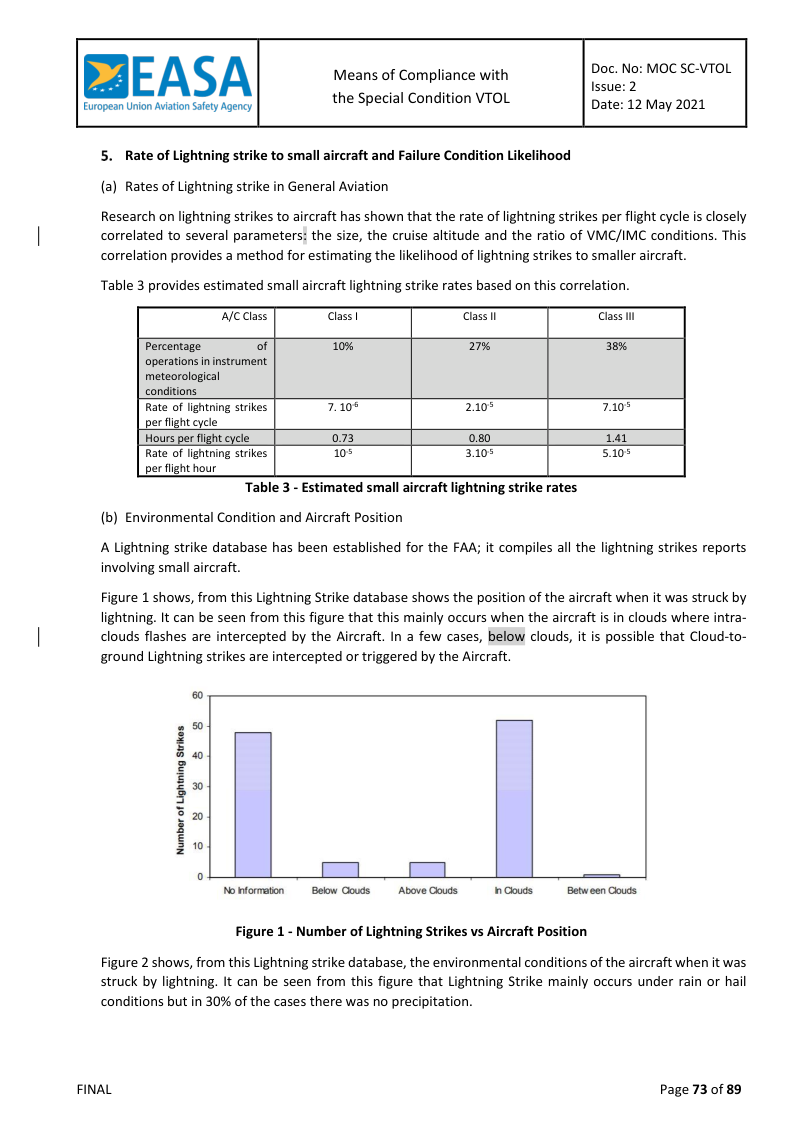
Figure 1 shows, from this Lightning Strike database shows the position of the aircraft when it was struck by lightning. It can be seen from this figure that this mainly occurs when the aircraft is in clouds where intra- clouds flashes are intercepted by the Aircraft. In a few cases, below clouds, it is possible that Cloud-to- ground Lightning strikes are intercepted or triggered by the Aircraft.
Figure 1 - Number of Lightning Strikes vs Aircraft Position
Figure 2 shows, from this Lightning strike database, the environmental conditions of the aircraft when it was struck by lightning. It can be seen from this figure that Lightning Strike mainly occurs under rain or hail conditions but in 30% of the cases there was no precipitation.
View figures, tables and original page layout
Connected references
Source-backed citations and subject-based engineering context are labelled separately. These links do not establish equivalence or project acceptance.
Related technical context
Engineering contextEvidence and scope
SC-VTOL-02 and MOC SC-VTOL — published scope
Aerospace Consulting navigation suggestion based on the subject and stated scope of the two publications.
This connection does not establish regulatory equivalence, acceptance of a newer edition, or applicability of a project-specific precedent to another programme.
Supporting source