
MOC-2 SC-VTOL
Means of Compliance with SC-VTOL — Batch 2
Issue 3 — FINAL Source checked 2026-11-28
Scope, source and reading notes
Complete final batch 2 of SC-VTOL means of compliance. Later batches may amend individual provisions in earlier batches.
Aerospace Consulting reference note: Second final batch of means of compliance. Adds and revises earlier material; MOC VTOL.2105 was excluded from this final publication for further revision.
The complete selected publication is available in reading text and as the original PDF. Reading text is extracted from the official PDF; page layout is simplified, and figures and tables should be checked in the original page view.
Search covers extracted text. Words contained only in graphics may not be searchable. The original publication is available below.
Official source recordOriginal PDF on this siteSource: EASA. Reproduced with source acknowledgment; source edition and status are shown above. SHA-256: 1fcaf1c7db56acce38f5379ba2117f1137dbc35be3fa6ee4136a0f572d856136
Doc. No: MOC-2 SC-VTOL Issue: 3 Date: 22 Dec 2022
Condition VTOL
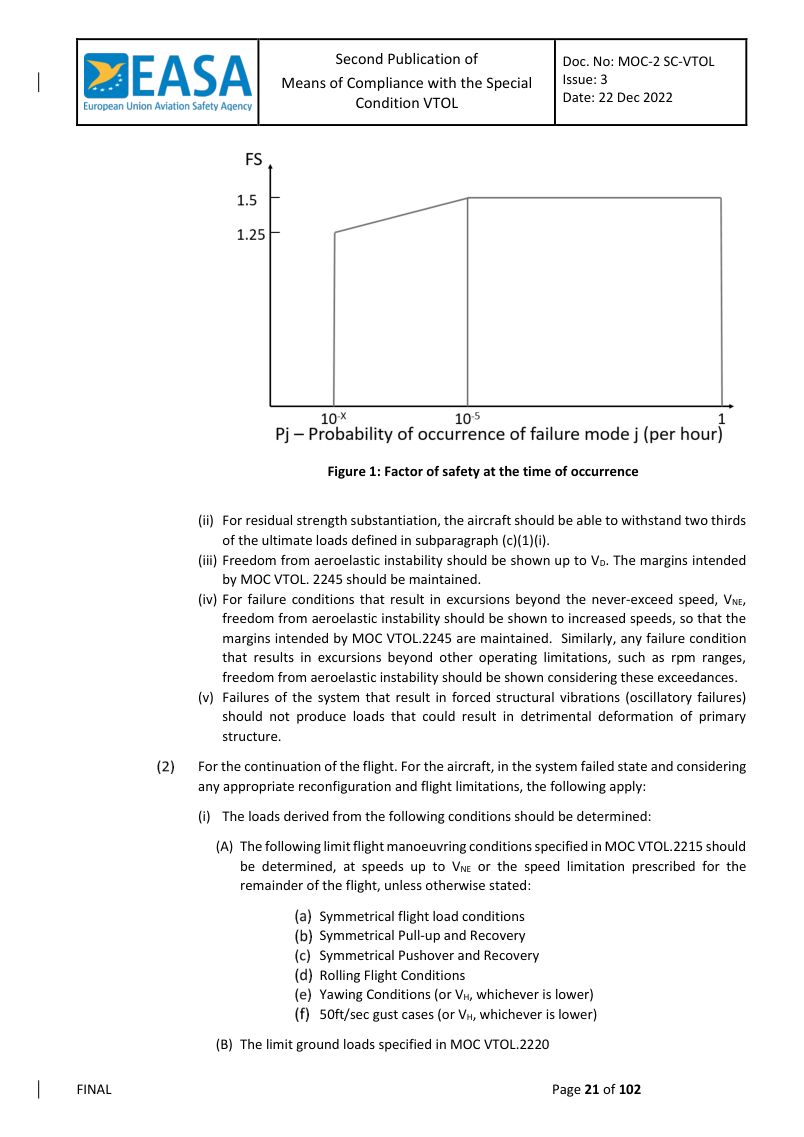
Figure 1: Factor of safety at the time of occurrence
(ii) For residual strength substantiation, the aircraft should be able to withstand two thirds
of the ultimate loads defined in subparagraph (c)(1)(i). (iii) Freedom from aeroelastic instability should be shown up to VD. The margins intended
by MOC VTOL. 2245 should be maintained. (iv) For failure conditions that result in excursions beyond the never-exceed speed, VNE,
freedom from aeroelastic instability should be shown to increased speeds, so that the margins intended by MOC VTOL.2245 are maintained. Similarly, any failure condition that results in excursions beyond other operating limitations, such as rpm ranges, freedom from aeroelastic instability should be shown considering these exceedances. (v) Failures of the system that result in forced structural vibrations (oscillatory failures)
should not produce loads that could result in detrimental deformation of primary structure.
For the continuation of the flight. For the aircraft, in the system failed state and considering any appropriate reconfiguration and flight limitations, the following apply:
(i) The loads derived from the following conditions should be determined:
(A) The following limit flight manoeuvring conditions specified in MOC VTOL.2215 should
be determined, at speeds up to VNE or the speed limitation prescribed for the remainder of the flight, unless otherwise stated:
Symmetrical flight load conditions
Symmetrical Pull-up and Recovery Symmetrical Pushover and Recovery
Rolling Flight Conditions Yawing Conditions (or VH, whichever is lower) 50ft/sec gust cases (or VH, whichever is lower)
(B) The limit ground loads specified in MOC VTOL.2220
View figures, tables and original page layout
Connected references
Source-backed citations and subject-based engineering context are labelled separately. These links do not establish equivalence or project acceptance.
Related technical context
Engineering contextEvidence and scope
SC-VTOL-02 and MOC-2 SC-VTOL — published scope
Aerospace Consulting navigation suggestion based on the subject and stated scope of the two publications.
This connection does not establish regulatory equivalence, acceptance of a newer edition, or applicability of a project-specific precedent to another programme.
Supporting source