
AMC 20-115D
Airborne Software Development Assurance Using EUROCAE ED-12 and RTCA DO-178
Current AMC; incorporated in AMC-20 Amendment 23 Source checked 2026-11-28
Scope, source and reading notes
Airborne software development assurance; includes GM1, GM2 and GM3 to AMC 20-115D.
Aerospace Consulting reference note: Guidance for airborne software development assurance using ED-12/DO-178 and associated supplements, with the related guidance on change impact analysis, coupling and error handling.
Complete selected AMC and associated material, from PDF pages 416–430 of the AMC-20 consolidation. The original PDF contains the whole consolidation. Reading text is extracted; original figures and layout remain available.
Search covers extracted text. Words contained only in graphics may not be searchable. The original publication is available below.
Official source recordOriginal PDF on this siteSource: EASA. Reproduced with source acknowledgment; source edition and status are shown above. SHA-256: b3d02d6ad4cd2833f79be85634221f52ea8bd90a84c733257193e4a60a2d536a
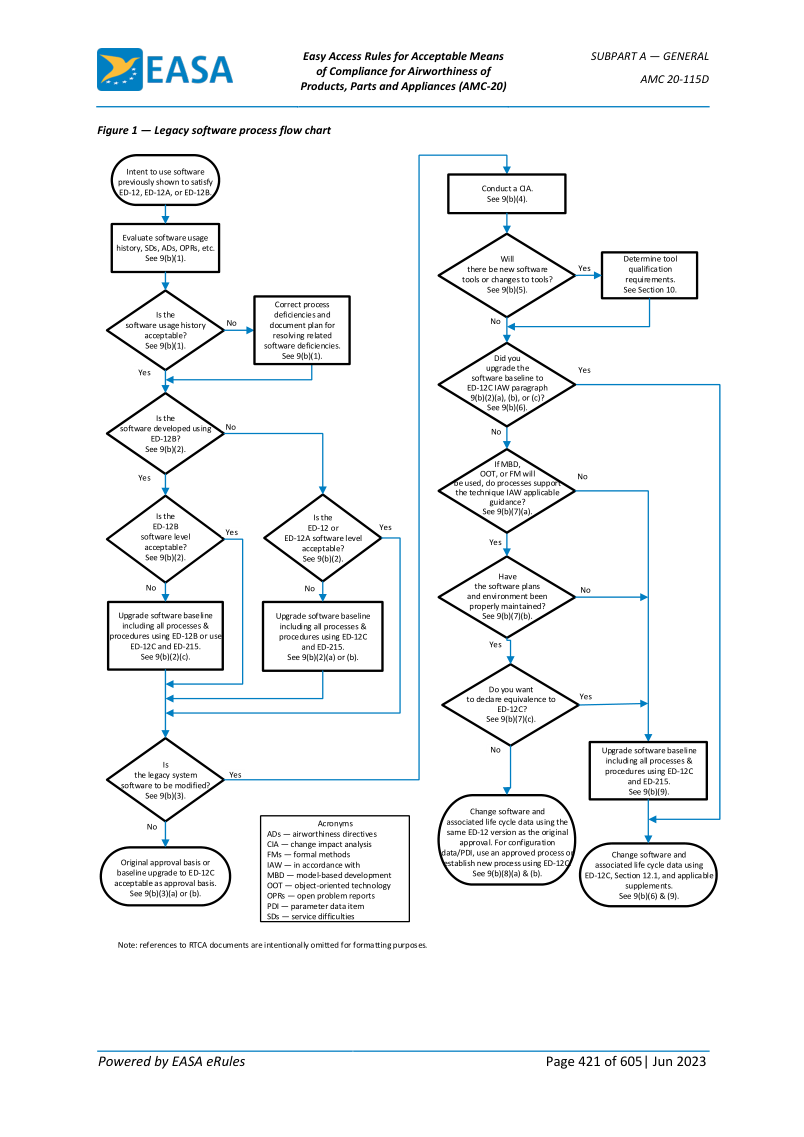
Figure 1 — Legacy software process flow chart
Intent to use software previously shown to satisfy
Conduct a CIA.
ED-12, ED-12A, or ED-12B.
See 9(b)(4).
Evaluate software usage history, SDs, ADs, OPRs, etc.
See 9(b)(1).
Determine tool
Yes
Will there be new software tools or changes to tools?
qualification requirements. See Section 10.
See 9(b)(5).
No
No
Is the software usage history
Correct process deficiencies and document plan for
acceptable?
See 9(b)(1).
resolving related software deficiencies.
See 9(b)(1).
Yes
Yes
Did you upgrade the software baseline to ED-12C IAW paragraph
9(b)(2)(a), (b), or (c)?
See 9(b)(6).
No
Is the software developed using
No
ED-12B? See 9(b)(2).
No
Yes
If MBD, OOT, or FM will be used, do processes support
the technique IAW applicable
guidance? See 9(b)(7)(a).
Yes
Yes
Is the ED-12B software level
Is the ED-12 or ED-12A software level
Yes
acceptable?
acceptable?
See 9(b)(2).
See 9(b)(2).
No
No
No
Have the software plans and environment been
properly maintained?
Upgrade software baseline
See 9(b)(7)(b).
Upgrade software baseline
including all processes & procedures using ED-12B or use
including all processes & procedures using ED-12C
Yes
ED-12C and ED-215.
See 9(b)(2)(c).
and ED-215. See 9(b)(2)(a) or (b).
Yes
Do you want to declare equivalence to
ED-12C? See 9(b)(7)(c).
No
Upgrade software baseline
including all processes & procedures using ED-12C
Yes
and ED-215.
Is the legacy system software to be modified?
See 9(b)(9).
See 9(b)(3).
No
Change software and associated life cycle data using the same ED-12 version as the original
approval. For configuration data/PDI, use an approved process or
establish new process using ED-12C.
See 9(b)(8)(a) & (b).
Change software and associated life cycle data using ED-12C, Section 12.1, and applicable
Original approval basis or baseline upgrade to ED-12C acceptable as approval basis.
See 9(b)(3)(a) or (b).
supplements. See 9(b)(6) & (9).
Acronyms ADs — airworthiness directives CIA — change impact analysis FMs — formal methods IAW — in accordance with MBD — model-based development OOT — object-oriented technology OPRs — open problem reports PDI — parameter data item SDs — service difficulties
Note: references to RTCA documents are intentionally omitted for formatting purposes.
View figures, tables and original page layout
Connected references
Source-backed citations and subject-based engineering context are labelled separately. These links do not establish equivalence or project acceptance.
Related technical context
Engineering contextEvidence and scope
AC 20-115D and AMC 20-115D — published scope
Aerospace Consulting navigation suggestion based on the subject and stated scope of the two publications.
This connection does not establish regulatory equivalence, acceptance of a newer edition, or applicability of a project-specific precedent to another programme.
Supporting source