
AMC 20-136A
Aircraft Electrical and Electronic System Lightning Protection
Current AMC; incorporated in AMC-20 Amendment 23 Source checked 2026-11-28
Scope, source and reading notes
Aircraft electrical and electronic system lightning protection, including both appendices.
Aerospace Consulting reference note: Provides guidance for assessing lightning effects, assigning protection levels and demonstrating protection of aircraft electrical and electronic systems.
Complete selected AMC and associated material, from PDF pages 464–496 of the AMC-20 consolidation. The original PDF contains the whole consolidation. Reading text is extracted; original figures and layout remain available.
Search covers extracted text. Words contained only in graphics may not be searchable. The original publication is available below.
Official source recordOriginal PDF on this siteSource: EASA. Reproduced with source acknowledgment; source edition and status are shown above. SHA-256: b3d02d6ad4cd2833f79be85634221f52ea8bd90a84c733257193e4a60a2d536a
design assurance level (DAL) (ED-80/DO-254, ED-12C/DO-178C) assigned for equipment redundancy, software, and airborne electronic hardware (AEH). This is because lightning is an environment that can cause common-cause effects. The term ‘design assurance level’ or ‘development assurance level’ (both abbreviated to ‘DAL’) should not be used to describe the system LCL because of the potential differences in the assigned classifications for software, AEH, and equipment redundancy. The lightning safety assessment must include all electrical and electronic equipment, components and electrical interconnections, assuming that they are potentially affected by lightning. It is not appropriate to use the lightning immunity data for electrical and electronic equipment, components and electrical interconnections as an information input to the lightning safety assessment. This information should only be used in the next phase, to show compliance with the applicable subpart of the lightning regulation, after the required LCL for the system is defined by the lightning safety assessment. The lightning safety assessment results from inputs coordinated between the safety specialist, the system specialist, and the HIRF/lightning specialist. This process may vary from applicant to applicant. Further details on performing the safety assessment can be found in AC 23.1309-1E, AMC 25.1309, AC-27-1B, AC-29-2C, EUROCAE ED-79A, SAE ARP 4761, and EUROCAE ED-158.
Note: Considering that lightning and HIRF environments may have similar effects on electro-electronic systems (disturbing electrical signals, causing upsets or damage to circuits) and that the applicable regulations are similarly structured, in many cases the system LCL and corresponding HIRF certification level (see AMC 20- 158A) should be the same.
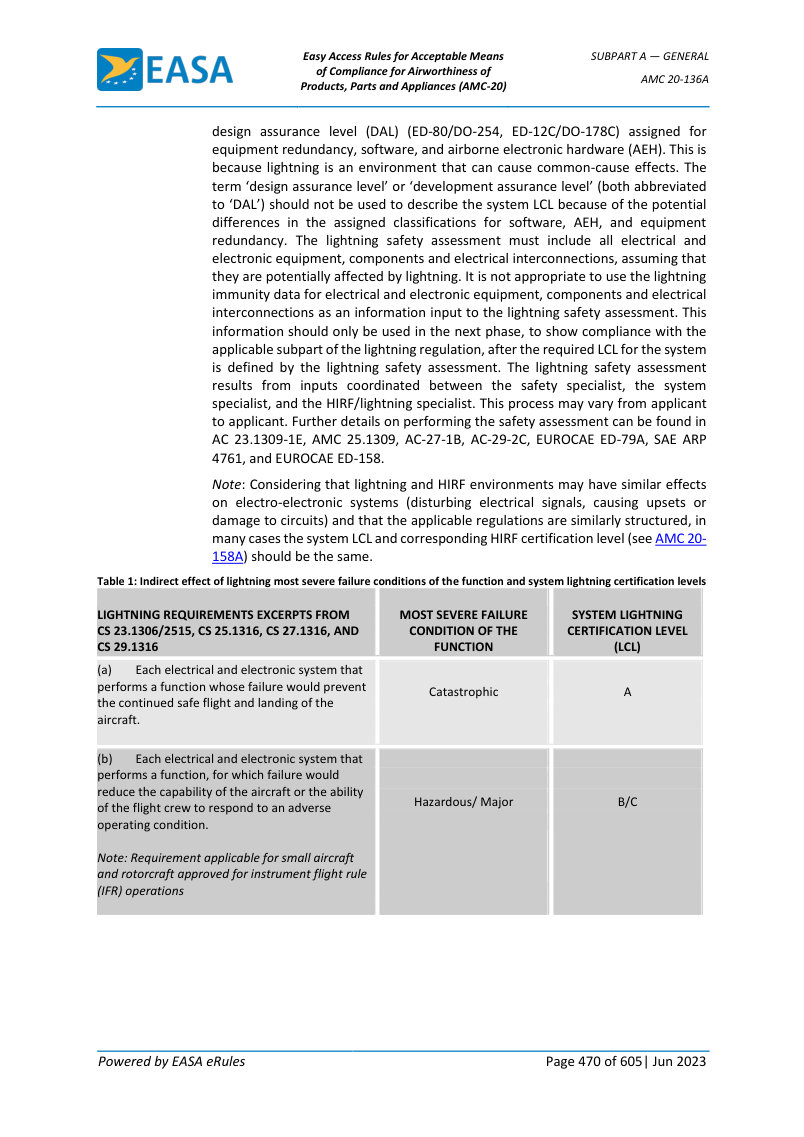
Table 1: Indirect effect of lightning most severe failure conditions of the function and system lightning certification levels
MOST SEVERE FAILURE
CONDITION OF THE
SYSTEM LIGHTNING CERTIFICATION LEVEL
LIGHTNING REQUIREMENTS EXCERPTS FROM CS 23.1306/2515, CS 25.1316, CS 27.1316, AND CS 29.1316
FUNCTION
(LCL)
Catastrophic A
(a) Each electrical and electronic system that performs a function whose failure would prevent the continued safe flight and landing of the aircraft.
Hazardous/ Major B/C
(b) Each electrical and electronic system that performs a function, for which failure would reduce the capability of the aircraft or the ability of the flight crew to respond to an adverse operating condition.
Note: Requirement applicable for small aircraft and rotorcraft approved for instrument flight rule (IFR) operations
View figures, tables and original page layout
Connected references
Source-backed citations and subject-based engineering context are labelled separately. These links do not establish equivalence or project acceptance.
Related technical context
Engineering contextEvidence and scope
AC 20-136C and AMC 20-136A — published scope
Aerospace Consulting navigation suggestion based on the subject and stated scope of the two publications.
This connection does not establish regulatory equivalence, acceptance of a newer edition, or applicability of a project-specific precedent to another programme.
Supporting source