
AC 25.1329-1C
Approval of Flight Guidance Systems
25.1329-1C — Changes 1–2 incorporated (2026-02-13) Source checked 2026-11-28
Scope, source and reading notes
Flight-guidance-system compliance under § 25.1329 for transport category airplanes; includes autopilots, flight directors, automatic thrust control, and associated interactions. Base publication catalog date: 2014-10-27; latest included change: 2026-02-13.
Aerospace Consulting reference note: Guidance for flight-guidance design and approval, incorporating Changes 1 and 2, including 2026 clarifications concerning disengagement alerts, override hazards, and incompatible modes.
The complete selected publication is available in reading text and as the original PDF. Reading text is extracted from the official PDF; page layout is simplified, and figures and tables should be checked in the original page view.
Search covers extracted text. Words contained only in graphics may not be searchable. The original publication is available below.
Official source recordOriginal PDF on this siteSource: FAA. Reproduced with source acknowledgment; source edition and status are shown above. SHA-256: d1122e89d61663cc44456dd1ebff460127469027d8d667b0fd695bc8436357e0
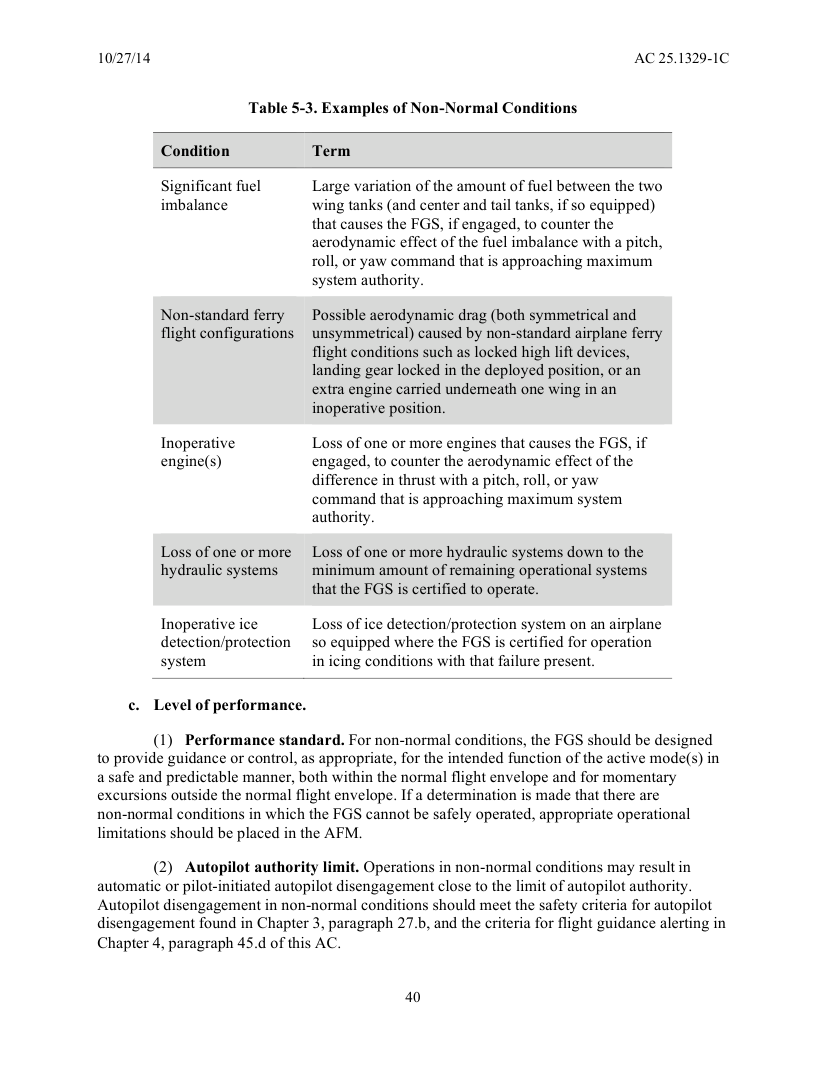
Table 5-3. Examples of Non-Normal Conditions
Term
Condition
Significant fuel Large variation of the amount of fuel between the two imbalance wing tanks (and center and tail tanks, if so equipped) that causes the FGS, if engaged, to counter the aerodynamic effect of the fuel imbalance with a pitch, roll, or yaw command that is approaching maximum system authority.
Non-standard ferry Possible aerodynamic drag (both symmetrical and flight configurations unsymmetrical) caused by non-standard airplane ferry
flight conditions such as locked high lift devices, landing gear locked in the deployed position, or an extra engine carried underneath one wing in an inoperative position.
Inoperative Loss of one or more engines that causes the FGS, if engine(s) engaged, to counter the aerodynamic effect of the difference in thrust with a pitch, roll, or yaw command that is approaching maximum system authority.
Loss of one or more hydraulic systems Loss of one or more hydraulic systems down to the minimum amount of remaining operational systems that the FGS is certified to operate.
Inoperative ice Loss of ice detection/protection system on an airplane detection/protection so equipped where the FGS is certified for operation system in icing conditions with that failure present.
c. Level of performance.
(1) Performance standard. For non-normal conditions, the FGS should be designed to provide guidance or control, as appropriate, for the intended function of the active mode(s) in a safe and predictable manner, both within the normal flight envelope and for momentary excursions outside the normal flight envelope. If a determination is made that there are non-normal conditions in which the FGS cannot be safely operated, appropriate operational limitations should be placed in the AFM.
(2) Autopilot authority limit. Operations in non-normal conditions may result in automatic or pilot-initiated autopilot disengagement close to the limit of autopilot authority. Autopilot disengagement in non-normal conditions should meet the safety criteria for autopilot disengagement found in Chapter 3, paragraph 27.b, and the criteria for flight guidance alerting in Chapter 4, paragraph 45.d of this AC.
View figures, tables and original page layout
Connected references
Source-backed citations and subject-based engineering context are labelled separately. These links do not establish equivalence or project acceptance.
Related technical context
Engineering contextEvidence and scope
AC 25.671-1 and AC 25.1329-1C — published scope
Aerospace Consulting navigation suggestion based on the subject and stated scope of the two publications.
This connection does not establish regulatory equivalence, acceptance of a newer edition, or applicability of a project-specific precedent to another programme.
Supporting source